An Existential Inquiry

Words are no more than verbal expressions that enable us to communicate a whole host of things to others that share the same lexicon of words. As limiting as language is, people seem to rely on it more than on anything else to express who they are, what they know, and most importantly, what they think they know. But what do people know? How do people know? Can people know? Knowledge is as elusive as words flowing from a fool’s mouth, perhaps even more elusive than that. So, in an ironic twist to the above opening, the following are a bunch of words to have a discussion of knowledge versus wisdom.
What is knowledge?
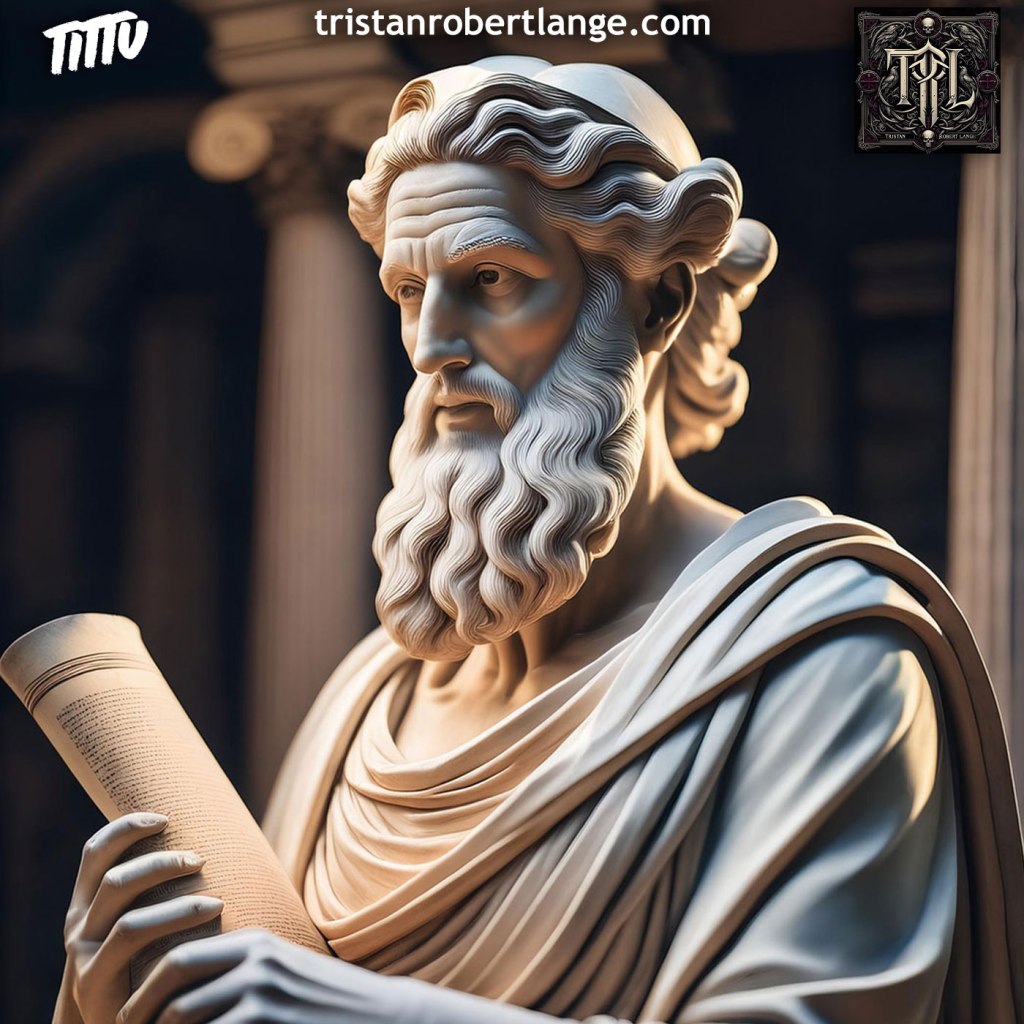
Many people over the course of millennia have sought to pin down knowledge. From Socrates to Gettier and beyond, people have sought to understand what knowledge is and how it is attained. Socrates (according to Plato) believed, as have many since him, that knowledge is Justified True Belief. In other words:
     S (Subject) knows that P (proposition) is true IFF (if and only if)
     P is true
     S believes that P is true, and
     S is justified in believing that P is true.
There have been other similar formulations and amendments to this as well; however, this one will do for time’s sake. To make this common formula of JTB easier to visualize, let’s replace S with a name, let us say Tony. And while we are at it, let us replace P with a real proposition: “I am an individual who exists.” Tony definitely believes that the proposition that states he exists is true and Tony could be seen as justified in believing that he exists because the evidence presented to him of his existence seems clear to himself and to others. For instance, as an individual “self” he has emotions, thoughts, desires, needs, and other such things that are seemingly his own. In other words, when he is hungry he feels hunger pains that are not contingent on others feeling those same pains. When he is angry, happy, sad, or whatever emotion that floods him, he is feeling that on his own…again, it is not contingent on what others are feeling. It is possible that one person be completely happy in the same room as someone who is totally pissed off at the world. The two could end up affecting each other’s mood for sure, but that does not have to be the case. If Tony places his hand on a hot stove, Tony yelps in pain. This pain is not felt by anyone else around him. All of this is evidence that Tony is an individual. All of these observations not only justify Tony in his belief that he is an individual who exists, but also seem to be evidence leading humans in general to accept that people are individuals, “selves” if you will, that exist. But does Tony truly KNOW that he is an individual that exists?
Some will argue that the answer to this question is no because the self cannot be properly defined and, therefore, the truth of such a “self” existing is in question. While this is no doubt philosophically true, such persons still write and speak using first-person singular and plural pronouns. And they also write using second and third-person singular and plural pronouns. Such pronouns are designed to distinguish selves. Thus, language is limited to the existence of “selves”. Yet, does this prove that a self exists? Are the collective experiences of billions of humans the world and time over, as seen in the evolution of language and the shaping of human civilization, to be ignored? But I (the self or non-self that is writing this piece) digress. Tony wants to say that he knows that he is an individual who exists because his existence is true, he believes that his existence is true and he is justified in believing that his existence is true. Yet, intellectually speaking, we cannot pin down the truth of his existence.
Edmund Gettier produced an essay proving the elusiveness of knowledge using another example. This essay will paraphrase one of his examples using Tony. Tony goes to an interview. After being interviewed by the prospective employer, he is asked to wait in the waiting room to hear if he has the job. In the meantime, a man named Mark, who happened to be counting change in his hand at the time of Tony’s departure from the interview room, was called in for his interview.
Later on, Tony sees the interviewer come out and whisper something to the office administrator of which Tony overheard the following proposition: “The man with 10 coins in his pocket has just got the job.” Tony is dejected because he had seen the coins in Mark’s hand and had counted ten of them. “The man with 10 coins just got the job. Mark must have gotten the job and I didn’t,” Tony says. What he doesn’t realize is that, in an attempt to find something in his pocket, Tony emptied change onto the table. The interviewer counted the change in his mind in order to kill the short time it took for Tony to find what he was looking for. It also happened that Tony had ten coins in his pocket.” In a hurry, of course, Tony put the change back in his pocket without really even giving any thought to it. Also, as it turns out, the office administrator walks over to Tony and tells him that he, in fact, has got the job.
Tony thought he knew the proposition that “the man with 10 coins in his pocket has just got the job”. He believed that to be true, and that Mark was the man who got the job. He was justified in believing that as Mark certainly had 10 coins in his pocket. Yet, he clearly did not know who got the job. Gettier has other examples and his thought-breaking essay can be found here: http://www.ditext.com/gettier/gettier.html
So, it can be easily shown that Knowledge is not something easily defined or understood. And it is very difficult to formulate it. Thus, to use the example of the “self” mentioned above, knowledge of such a self seems elusive at best. But this does not just conveniently work for inquiries on the existence of a self or selves, rather, all knowledge falls under such scrutiny. Science, which comes from the Latin word Scientia, literally means knowledge. The sciences are a means of acquiring knowledge, be they physical, psychological, theological, or any other type of “science.” Physical and natural sciences are the sciences that most people refer to when they use the word “science” but there are many, many more…again, I digress.
One major point is that it is not just knowledge about the self that comes into question, but knowledge in general. If the sciences lead to the attainment of knowledge and knowledge is hard to lay claim of, then what do we make of the knowledge we think we’ve gained through the sciences? David Hume was certainly skeptical in this regard. All the evidence we have for believing something could never exhaust the possible evidence there is to be gained…evidence that could be contrary to the conclusions we are drawing based off the limited “evidence” we have. What’s more, to complicate matters further, if we are not sure that we our “selves” actually exist, that the self may be mere illusion, then how can we be sure that the data collected by potentially illusory selves is any more a reality than the selves that collected it is?
The fact of the matter is that nobody truly lives their lives on the theory that their selves do not exist. Such a belief would prove to be counteractive to life. The same is true when it comes to knowledge in general. While we may not be able to pinpoint what knowledge is or whether or not we actually attain it, one would be hard pressed to find someone who really believes the proposition that “we cannot know.” Someone may wish to bring up Socrates as an example that such a person has existed…but I would say that even Socrates believed that he knew things (Socrates will be discussed more shortly). At the very least he “knew” he was ignorant on all matters…he “knew” that knowledge was elusive.
What is wisdom?

In short, wisdom can be seen as “understanding”. It is distinct from knowledge. One can spend a lifetime attaining knowledge (provided, of course, that knowledge is attainable) and spewing it out like a walking encyclopedia, yet they may or may not have any insight or understanding of the knowledge they spew. Sir Francis Bacon states, “scientia potentia est” (“Knowledge is power”) and this certainly is true. But with that said, knowledge, and especially the thought that one has acquired a lot of it, can be a corruptive power. Often, knowledge leads people on to believe that they are wise, simply on the merit of knowing a lot. The more they think they know, the more superior they think they are regarding those with lesser amounts of knowledge. But such a belief leads fools to their folly. In fact, wisdom is not contingent on the amount of knowledge one possesses. And since wisdom is the pursuit of philosophy it is a heady mistake to assume that the more a philosopher knows the closer to attaining his/her goal he or she is. A simpleton can be the wisest person in the world over and above a scholar.
Wisdom requires humility and acuity. It is the understanding that one has of the pieces of the puzzle (to use an analogy) in relation to the puzzle itself. We can gather puzzle pieces all day long, but that does not mean we have solved the puzzle or even understand the puzzle. In fact, to keep the analogous puzzle in play here, wisdom is the understanding that even with all of the pieces collected and gathered, the puzzle may not be able to be solved at all.
This is the wisdom of Socrates. He was an educated, brilliant philosopher. Yet listen to him as he speaks toward those accusing him of corrupting the youth:
“Is there not here conceit of knowledge, which is a disgraceful sort of ignorance? And this is the point in which, as I think, I am superior to men in general, and in which I might perhaps fancy myself wiser than other men, – that whereas I know but little of the world below, I do not suppose that I know” (https://classics.mit.edu/Plato/apology.html).
So according to Socrates, while the knowledgeable believe themselves to be superior to those who are less learned than they are, it is those who recognize that they know nothing of true reality at all who are truly superior. How can a person not be humbled by such a discovery? Surely humility follows true wisdom.
Laozi says in the Dao de Jing, “The wise are not erudite; The erudite are not wise” (Dao de Jing, Chapter 81, https://lorenwebster.net/2004/07/01/taoteching-chapter-81/).
Wisdom then is a much needed and rarely acquired thing. Ah, if more would open their minds to the glorious song of Sophia! If more would listen to her in place of listening to themselves! If people would suckle from her breast the flowing milk that brings forth such understanding! Such people would shine like the glowing orbs that fill a clear night’s sky!
The Crux
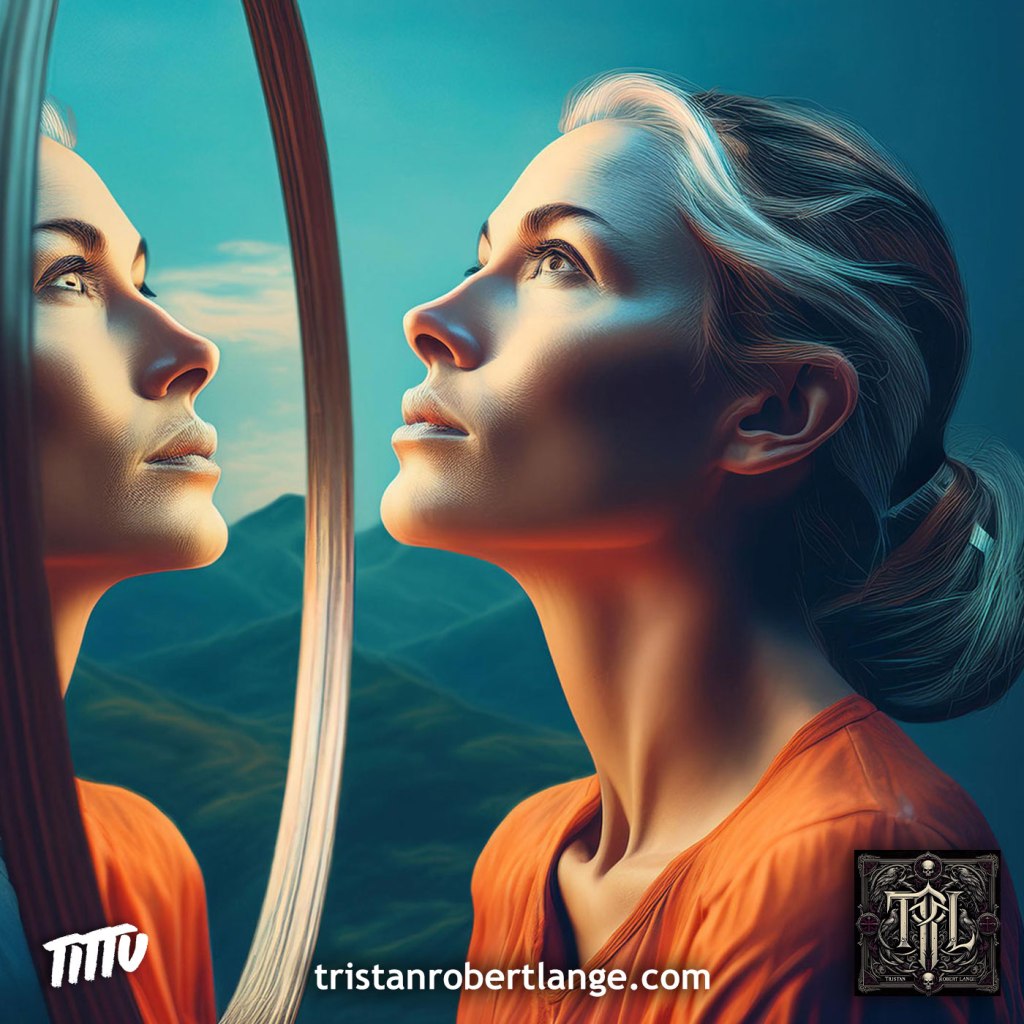
The crux of the matter is that while we must come to terms with the fact that we have a hard time proving we know anything, we must continue in life, right or wrong, and try to deeper examine who we are as people. In fact, the very philosophers who question whether a “self” exists or whether we can have any knowledge at all, have come to those philosophical musings with much self-examination as well as examination of the world around them. Thus, what all people should be encouraging is self-examination.
Anything that promotes self-examination is wise in that it calls each human being to look deeper into his or her self. If at the end of the day one finds that there really is no self, then at least they have discovered that about his or her “self.” No self is as much of an awareness as self. But, it is hard to imagine such people seeking to be anything but monks attempting to reach enlightenment…and even to seek that would be a desire the Buddha would say needs to be extinguished. Thus, if self is an illusion, people need to discover that about themselves and shed the illusion like a blanket; however, if it is not an illusion then let self-discovery lead there. But whatever truth is to be found about oneself, one should never surrender in the quest that leads to self-discovery.
© 2024 Tristan Robert Lange. All rights reserved.
First published on Medium.com, October 21, 2024.
Originally written circa 2011.


 Tristan Robert Lange
Leave a comment